BPC-157
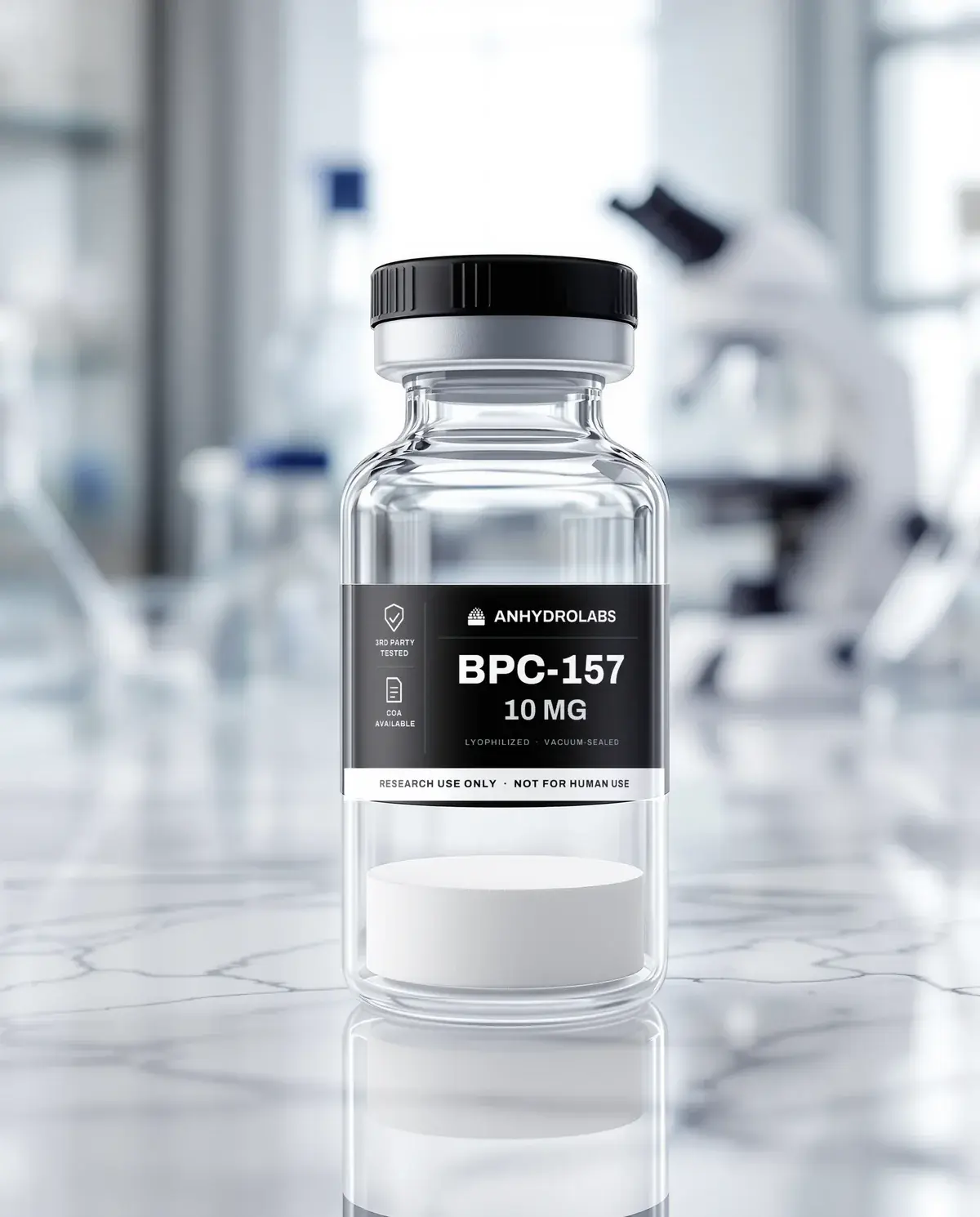
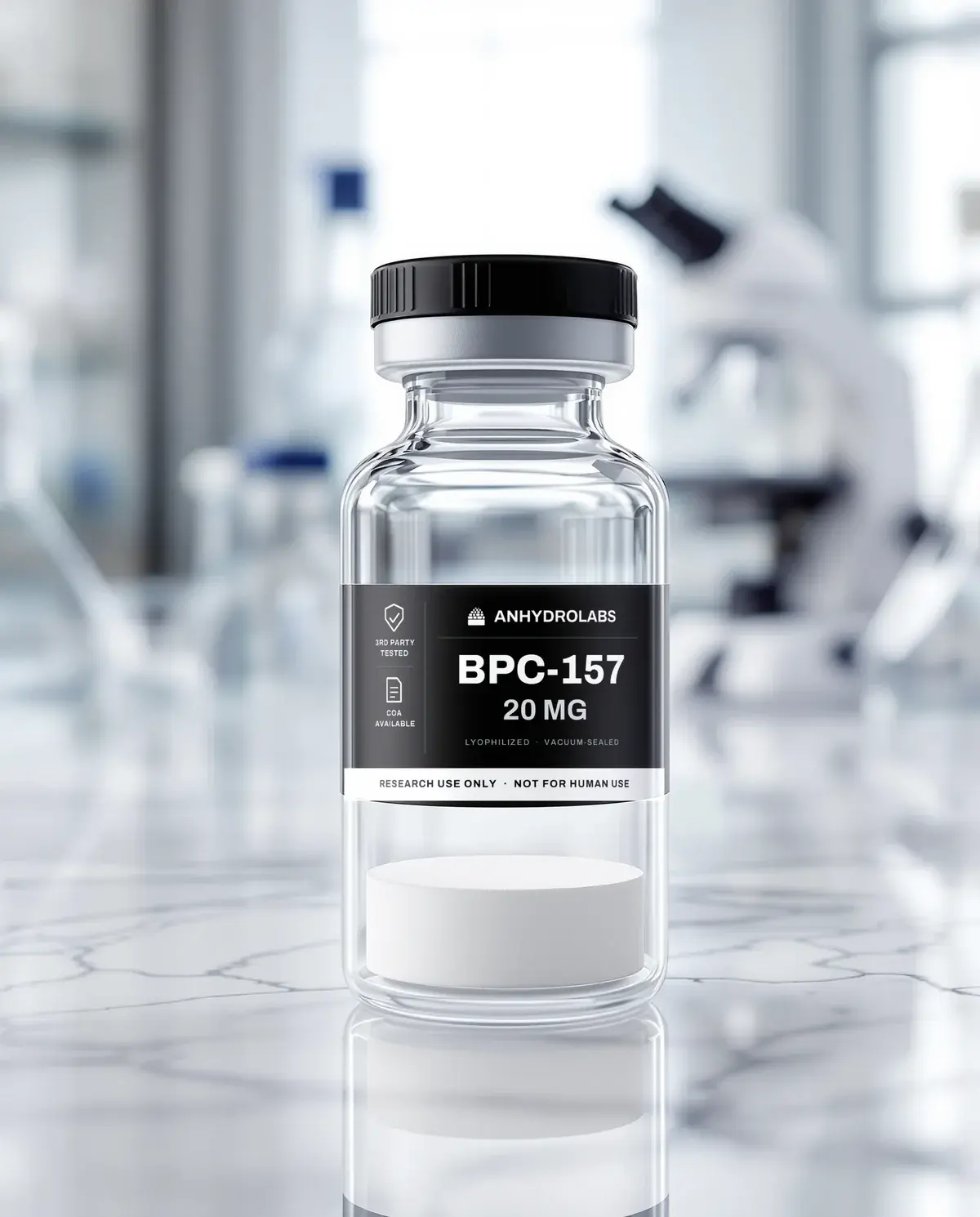
Lyophilized, vacuum-sealed, single vial.
- CAS
- 137525-51-0
- Form
- Lyophilized powder
- Storage
- Frozen, in the dark
- Ships
- Vials within 1 business day, kits by Dec 12, 2026
- In stock
- Ships within the US
- Pay by card or crypto
- All sales final
BPC-157 is a 15-residue peptide, a pentadecapeptide, first described in 1993 by Sikirić and colleagues at the University of Zagreb as a fragment of a protein from human gastric juice that they named BPC. No receptor for it has been identified. Nearly all published work is in cultured cells and rodents, and it is not approved as a drug by any regulator.
Supplied for laboratory research use only. Not for human or veterinary use, and not for diagnostic or therapeutic application.
BPC-157: compound data
- Molecular formula
- C62H98N16O22
- Molecular weight
- 1,419.5 g/mol
- CAS number
- 137525-51-0
- PubChem
- CID 9941957
- Form supplied
- Lyophilized powder, vacuum-sealed
- Concentration
- mg/mL and molarity calculator
Reference values from PubChem, the chemistry database of the US National Library of Medicine, for the compound as registered there.
About BPC-157
Structure of BPC-157
The sequence is Gly-Glu-Pro-Pro-Pro-Gly-Lys-Pro-Ala-Asp-Asp-Ala-Gly-Leu-Val, or GEPPPGKPADDAGLV: a linear chain with free termini. Four of the fifteen residues are proline, three of them consecutive. One lysine stands against one glutamate and two aspartates, so the peptide is acidic overall. It has no cysteine, methionine or tryptophan, and therefore no disulfide bonds. PubChem computes an XLogP of -9, marking it as strongly hydrophilic. FDA treats the free base and the acetate salt as separate bulk substances, so the salt form matters whenever a formula weight is used.
Where BPC-157 comes from
Sikirić and colleagues reported in the Journal of Physiology (Paris) in 1993 that a gastric juice peptide of about 40,000 Da, named BPC, had recently been isolated, and that a 15-amino-acid fragment thought to be essential for its activity, BPC 157, had been fully characterized. The initials stand for body protection compound. A 2025 review by Józwiak and colleagues notes that the sequence shows no homology with known intestinal peptides, so it is not a recognized fragment of a characterized human hormone. PubChem lists Bepecin, PL-10, PLD-116 and PL-14736 as other names for the same molecule.
What BPC-157 binds
No primary receptor or binding partner has been identified. Published mechanistic work reports downstream signaling changes, mostly in cultured cells. Hsieh and colleagues (2017) found increased messenger RNA and protein expression of VEGFR2, but not of VEGF-A, in human vascular endothelial cells, together with VEGFR2 internalization and time-dependent activation of the VEGFR2-Akt-eNOS pathway; the endocytosis inhibitor dynasore suppressed both. The Józwiak review also lists the nitric oxide system, expression of the early growth response gene EGR-1, and dopamine and serotonin systems among proposed targets. These are observations downstream of an unknown first binding event.
BPC-157 in the research literature
The Józwiak review catalogs work in Sprague-Dawley and Wistar rats, in mice and in beagle dogs, across a range of injury and gastrointestinal models, together with Caco-2 and endothelial cell cultures. Hsieh and colleagues used the chick chorioallantoic membrane assay, endothelial tube formation and a rat hind-limb ischemia model. The earliest registered human study is a Phase 1 safety and pharmacokinetics study in 42 volunteers (NCT02637284); according to the review, its investigators cancelled submission of the findings in 2016. The review also describes a small retrospective report. No controlled human trial data appear in the sources cited here.
Regulatory status of BPC-157
BPC-157 is not approved by the FDA, and the Józwiak review states that no other regulatory authority has approved it. FDA's page on bulk drug substances that may present significant safety risks in compounding, current as of April 22, 2026, lists it among withdrawn nominations and records concerns about immunogenicity, peptide-related impurities and characterization, and a lack of safety information. In the briefing document for its compounding advisory committee meeting of July 23-24, 2026, FDA proposed that neither BPC-157 free base nor BPC-157 acetate be included on the 503A bulks list, with no final determination yet issued. It is supplied here as a reference reagent for in-vitro laboratory research only.
Handling BPC-157 in the laboratory
BPC-157 is supplied lyophilized in a vacuum-sealed vial. Keep the sealed vial frozen at -4 °F and protected from light, and let it reach room temperature before breaking the seal so that moisture does not condense on the powder. Once in solution, material keeps for about four weeks at 39 °F; divide it into single-use aliquots instead of freezing and thawing one tube repeatedly. The Józwiak review describes the peptide as stable in water, and PubChem's computed XLogP of -9 is consistent with ready solubility in aqueous buffers.
Sources
- PubChem compound summary: BPC-157, CID 9941957
- A new gastric juice peptide, BPC. An overview of the stomach-stress-organoprotection hypothesis and beneficial effects of BPC (Sikirić P, et al. Journal of Physiology (Paris), 1993)
- Józwiak et al., 2025. PubMed Central PMC11859134
- Hsieh MJ, et al. Journal of Molecular Medicine, 2017. PubMed 27847966
- Certain Bulk Drug Substances for Use in Compounding that May Present Significant Safety Risks
- FDA briefing document, compounding advisory committee meeting, July 23-24, 2026
Research notes on BPC-157
- Are Peptides Legal? US Law for Research BuyersAre peptides legal in the US? What research use only means, why these are not FDA-approved drugs, which are controlled substances, and how imports work.
- BPC-157 vs TB-500: How the Two Peptides DifferBPC 157 vs TB 500 compared side by side: sequences, origins, molecular weights, proposed mechanisms, research models, regulatory status and lab handling.
- What Is BPC-157? Sequence, Structure and ResearchWhat is BPC-157? A 15-residue synthetic peptide from gastric juice studies: its sequence, formula, CAS number, proposed mechanisms and regulatory status.
BPC-157: common questions
What is BPC-157 supplied as?
BPC-157 is supplied as a lyophilized (freeze-dried) powder in a vacuum-sealed vial, in 5 mg, 10 mg and 20 mg, for in-vitro laboratory research use only.
How much does BPC-157 cost?
BPC-157 is $44.95 for any size, in US dollars. Volume pricing is quoted on request.
Is BPC-157 available as a 10-vial kit?
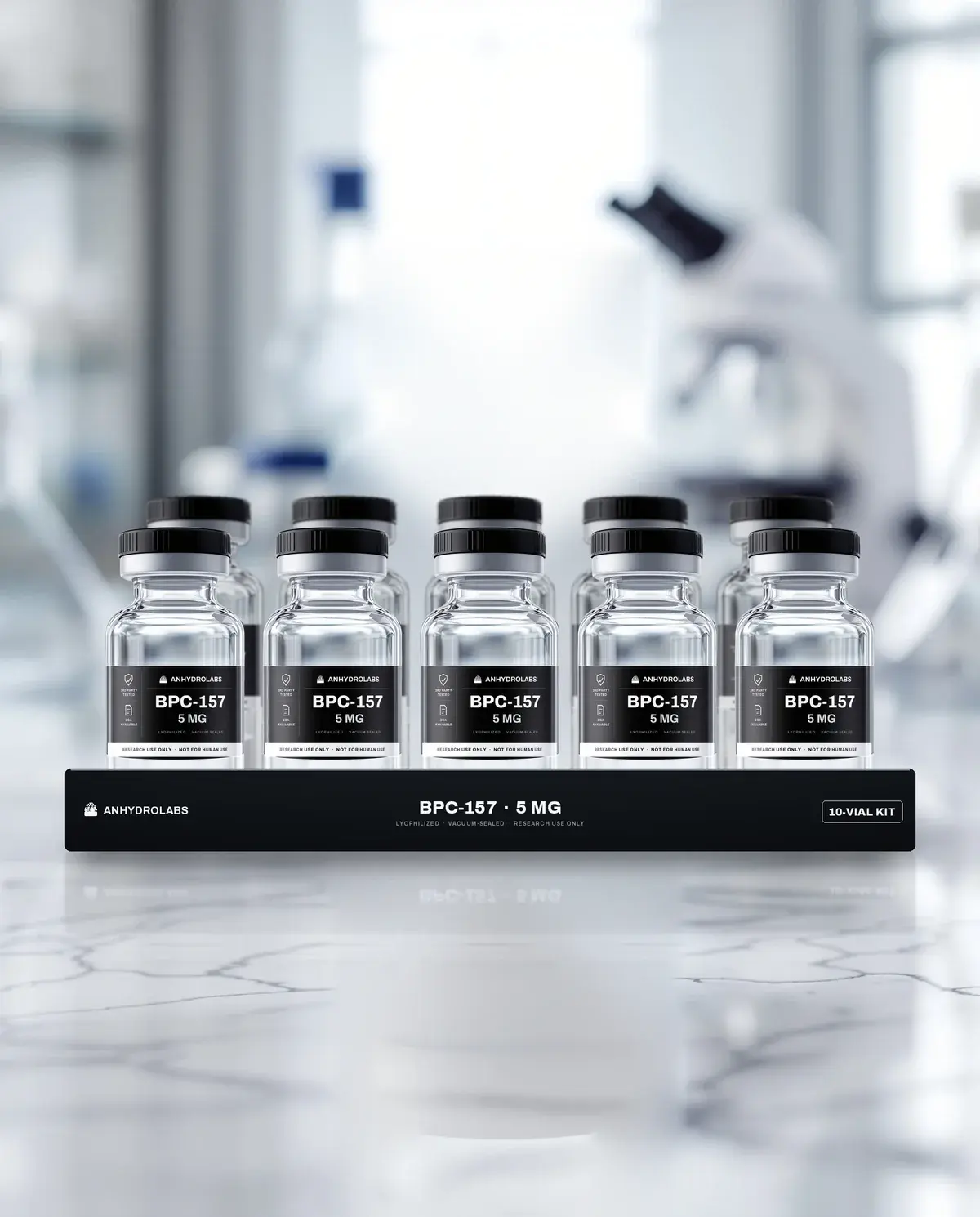
Yes. BPC-157 comes in a 10-vial kit: 5 mg for $90.00 ($9.00 per vial); 10 mg for $139.50 ($13.95 per vial), presale prices. A kit is ten sealed vials of the same size, priced below ten single vials.
When do BPC-157 presale kits ship?
By Dec 12, 2026. Presale kits are 10% off. If we cannot ship by Dec 12, 2026, we tell you before that date and you can cancel for a full refund.
What is the CAS number of BPC-157?
The CAS registry number of BPC-157 is 137525-51-0.
How should BPC-157 be stored?
Frozen at −4 °F and protected from light, from the day it arrives. Let the vial reach room temperature before breaking the seal; once reconstituted, stability holds for about four weeks refrigerated at 39 °F.
How fast does BPC-157 ship?
Presale kits ship from the United States by Dec 12, 2026, to US addresses. Sizes marked in stock ship within 1 business day of payment.
Is BPC-157 for human use?
No. It is supplied as a reference reagent for laboratory research use. Not for human or veterinary use, and not for diagnostic or therapeutic application.
What is the amino acid sequence of BPC-157?
BPC-157 is Gly-Glu-Pro-Pro-Pro-Gly-Lys-Pro-Ala-Asp-Asp-Ala-Gly-Leu-Val, written GEPPPGKPADDAGLV in one-letter code. It is a linear chain of 15 residues with free termini, four prolines and no cysteine, methionine or tryptophan.
What receptor does BPC-157 bind?
No receptor has been identified. Cell studies report downstream changes instead, such as increased expression and internalization of VEGFR2 and activation of the VEGFR2-Akt-eNOS pathway in endothelial cells, and a 2025 review lists the nitric oxide system and EGR-1 among proposed targets. The first binding event is unknown.
Is BPC-157 approved by the FDA?
No. BPC-157 is not a component of an approved drug. In the briefing document for its July 23-24, 2026 compounding advisory committee meeting, FDA proposed that neither the free base nor the acetate salt be included on the 503A bulks list, and it has said a final determination will follow the advisory process.
$44.95
BPC-157 · 10 mg