MOTS-c
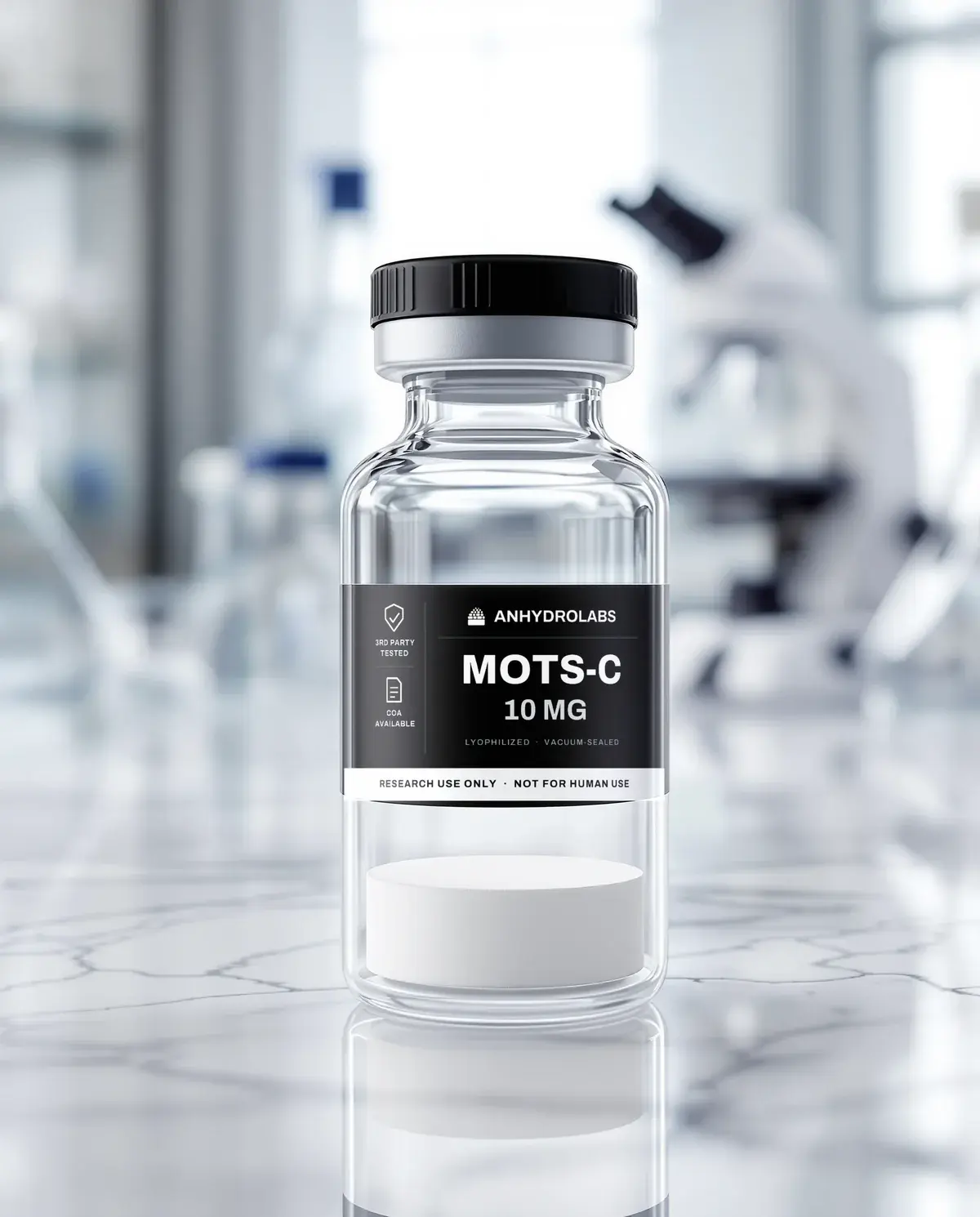
Lyophilized, vacuum-sealed, single vial.
- CAS
- 1627580-64-6
- Form
- Lyophilized powder
- Storage
- Frozen, in the dark
- Ships
- Vials within 1 business day, kits by Dec 12, 2026
- In stock
- Ships within the US
- Pay by card or crypto
- All sales final
MOTS-c is a 16-amino-acid peptide encoded by a short open reading frame inside the mitochondrial 12S ribosomal RNA gene. It was reported in 2015 by Changhan Lee, Pinchas Cohen and colleagues, who named it for the mitochondrial open reading frame of the 12S rRNA-c. In the literature it is known for inhibiting the folate pathway and de novo purine synthesis in cells, with activation of AMP-activated protein kinase.
Supplied for laboratory research use only. Not for human or veterinary use, and not for diagnostic or therapeutic application.
MOTS-c: compound data
- Molecular formula
- C101H152N28O22S2
- Molecular weight
- 2,174.6 g/mol
- CAS number
- 1627580-64-6
- PubChem
- CID 146675088
- Form supplied
- Lyophilized powder, vacuum-sealed
- Concentration
- mg/mL and molarity calculator
Reference values from PubChem, the chemistry database of the US National Library of Medicine, for the compound as registered there.
About MOTS-c
Structure of MOTS-c
MOTS-c is a linear peptide of 16 residues, MRWQEMGYIFYPRKLR, which PubChem writes as H-MRWQEMGYIFYPRKLR-OH, with a free amino terminus and a free carboxyl terminus. It contains two methionines and no cysteine, so the two sulfur atoms in its formula are thioethers and the chain has no disulfide bond. Three arginines and one lysine sit against a single glutamate, which makes the peptide basic. One tryptophan, two tyrosines and one phenylalanine give it aromatic character. PubChem also lists a trifluoroacetate salt of the human sequence as a synonym, so the counter-ion of a given lot is worth recording.
Where MOTS-c comes from
The discovery followed humanin, a peptide encoded by a short open reading frame in mitochondrial DNA, which suggested that more such sequences might exist. Lee and colleagues at the University of Southern California, with collaborators at UCLA and the National Institute on Aging, described a 51 base pair open reading frame within the 12S rRNA gene in Cell Metabolism in 2015. They reported that the mitochondrial genetic code gives tandem start and stop codons for this sequence, while the standard code gives a viable peptide, and concluded that translation takes place in the cytoplasm. The peptide was detected in mouse and rat tissues and in human and rodent plasma.
What MOTS-c binds
No cell-surface receptor is described for MOTS-c in the papers cited here. The 2015 study reported that its cellular actions inhibit the folate pathway and the de novo purine biosynthesis tied to it. In cells engineered to express the peptide, levels of 5-methyltetrahydrofolate fell and the purine intermediate AICAR accumulated about 20-fold over controls, with increased phosphorylation of AMP-activated protein kinase at Thr172. A 2018 paper from the same laboratory reported that under glucose restriction MOTS-c moves to the nucleus in an AMPK-dependent manner and interacts with stress-responsive transcription factors such as NFE2L2, also called NRF2.
MOTS-c in the research literature
Published work uses cultured cells and rodents. The original study used HEK293 cells, HeLa cells, HeLa cells depleted of mitochondrial DNA and L6 rat myotubes for metabolite profiling and AMPK signaling, and CD-1 and C57BL/6 mice for whole-animal metabolic measurements. The 2018 study followed nuclear translocation and gene expression in cultured cells under metabolic stress. Much of the mechanistic literature comes from a small group of related laboratories, and one author disclosed a consulting and shareholding relationship with CohBar, Inc. ClinicalTrials.gov lists a Phase 2 study of MOTS-c, NCT07505745, as recruiting.
Regulatory status of MOTS-c
MOTS-c is investigational and is not the active ingredient of an FDA-approved drug. FDA's page on bulk substances that may present significant safety risks in compounding, current as of April 22, 2026, lists MOTS-c among nominations that were withdrawn, and states that compounded products containing it may pose a significant risk of immunogenicity and may have complexities with peptide-related impurities and characterization. A registered trial is not an approval. Here MOTS-c is supplied as a reference reagent for in-vitro laboratory research only, not for human or veterinary diagnosis, treatment, or consumption.
Handling MOTS-c in the laboratory
MOTS-c arrives lyophilized in a vacuum-sealed vial. Keep the sealed vial frozen at -4 °F and protected from light, and let it reach room temperature before breaking the seal so that moisture does not condense on the powder. Once in solution, hold it at about 39 °F and use it within roughly four weeks; divide a stock into single-use aliquots instead of freezing and thawing one tube repeatedly. The sequence contains two methionines and one tryptophan, residues that carry oxidizable side chains, so keeping air and light exposure of solutions short is a sensible precaution for this peptide.
Sources
- Lee et al., Cell Metab, 2015. PubMed Central PMC4350682
- The Mitochondrial-Encoded Peptide MOTS-c Translocates to the Nucleus to Regulate Nuclear Gene Expression in Response to Metabolic Stress (Kim et al., Cell Metab, 2018)
- MOTS-c, PubChem CID 146675088
- Certain Bulk Drug Substances for Use in Compounding that May Present Significant Safety Risks (FDA)
- ClinicalTrials.gov NCT07505745
Research notes on MOTS-c
- MOTS-c Peptide: The Mitochondrial-Derived PeptideThe MOTS-c peptide explained: its 16-residue sequence, formula and CAS number, its origin in the mitochondrial 12S rRNA gene, the AMPK link and its status.
MOTS-c: common questions
What is MOTS-c supplied as?
MOTS-c is supplied as a lyophilized (freeze-dried) powder in a vacuum-sealed vial, in 10 mg, 20 mg and 40 mg, for in-vitro laboratory research use only.
How much does MOTS-c cost?
MOTS-c is $39.95 for any size, in US dollars. Volume pricing is quoted on request.
Is MOTS-c available as a 10-vial kit?
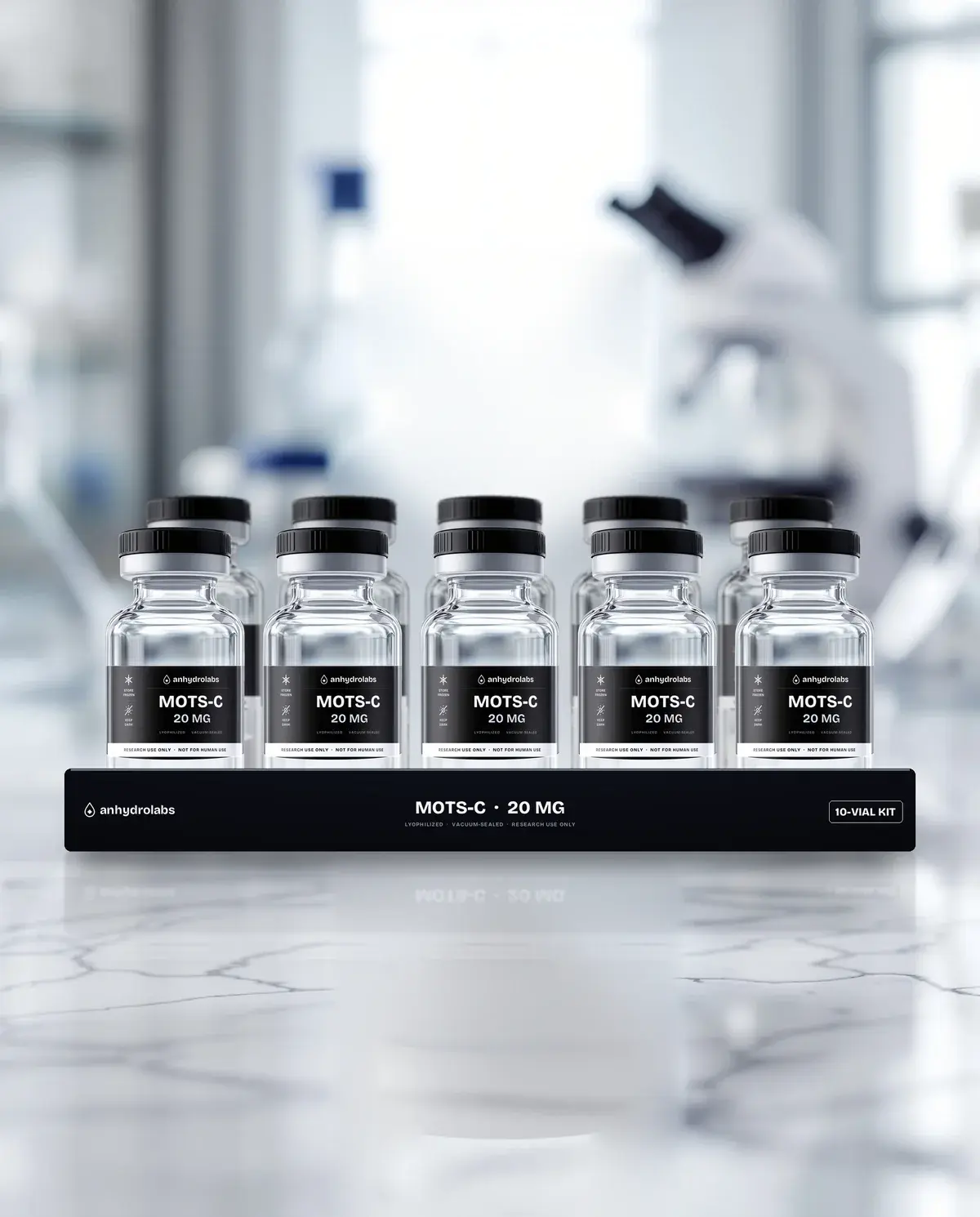
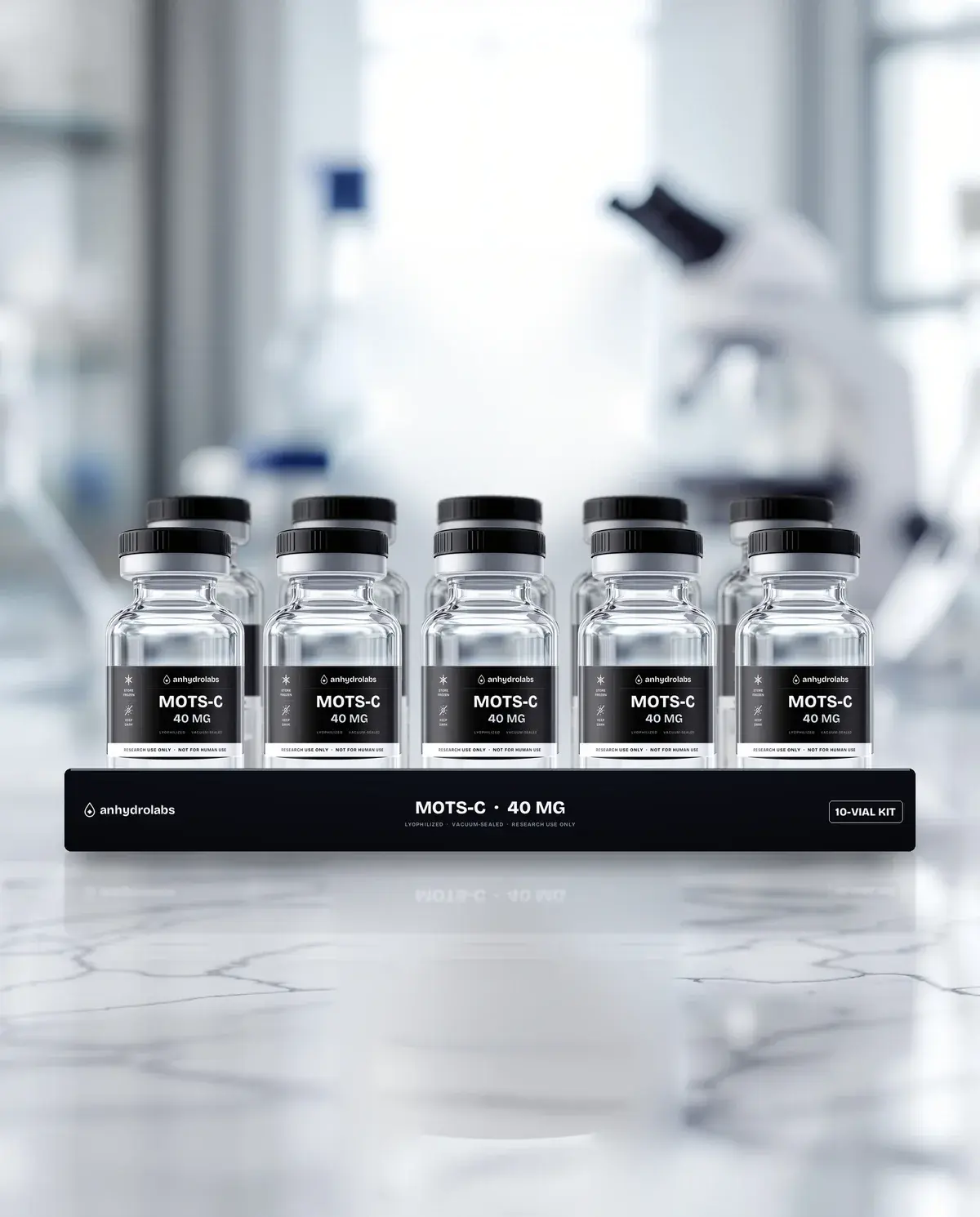
Yes. MOTS-c comes in a 10-vial kit: 10 mg for $157.50 ($15.75 per vial); 20 mg for $301.50 ($30.15 per vial); 40 mg for $450.00 ($45.00 per vial), presale prices. A kit is ten sealed vials of the same size, priced below ten single vials.
When do MOTS-c presale kits ship?
By Dec 12, 2026. Presale kits are 10% off. If we cannot ship by Dec 12, 2026, we tell you before that date and you can cancel for a full refund.
What is the CAS number of MOTS-c?
The CAS registry number of MOTS-c is 1627580-64-6.
How should MOTS-c be stored?
Frozen at −4 °F and protected from light, from the day it arrives. Let the vial reach room temperature before breaking the seal; once reconstituted, stability holds for about four weeks refrigerated at 39 °F.
How fast does MOTS-c ship?
Presale kits ship from the United States by Dec 12, 2026, to US addresses. Sizes marked in stock ship within 1 business day of payment.
Is MOTS-c for human use?
No. It is supplied as a reference reagent for laboratory research use. Not for human or veterinary use, and not for diagnostic or therapeutic application.
What is the sequence of MOTS-c?
MOTS-c is MRWQEMGYIFYPRKLR, a linear peptide of 16 amino acids with free termini. It is encoded by a 51 base pair open reading frame in the mitochondrial 12S rRNA gene, according to the 2015 paper that first described it.
Who discovered MOTS-c?
Changhan Lee, Pinchas Cohen and colleagues reported MOTS-c in Cell Metabolism in 2015. The work came from the Leonard Davis School of Gerontology at the University of Southern California with collaborators at UCLA and the National Institute on Aging. The name stands for mitochondrial open reading frame of the 12S rRNA-c.
Does MOTS-c bind a known receptor?
The papers cited in this profile do not identify a cell-surface receptor. They describe intracellular actions instead: inhibition of the folate pathway and de novo purine synthesis, accumulation of the intermediate AICAR, activation of AMP-activated protein kinase, and movement of the peptide into the nucleus under metabolic stress.
$39.95
MOTS-c · 10 mg