Retatrutide
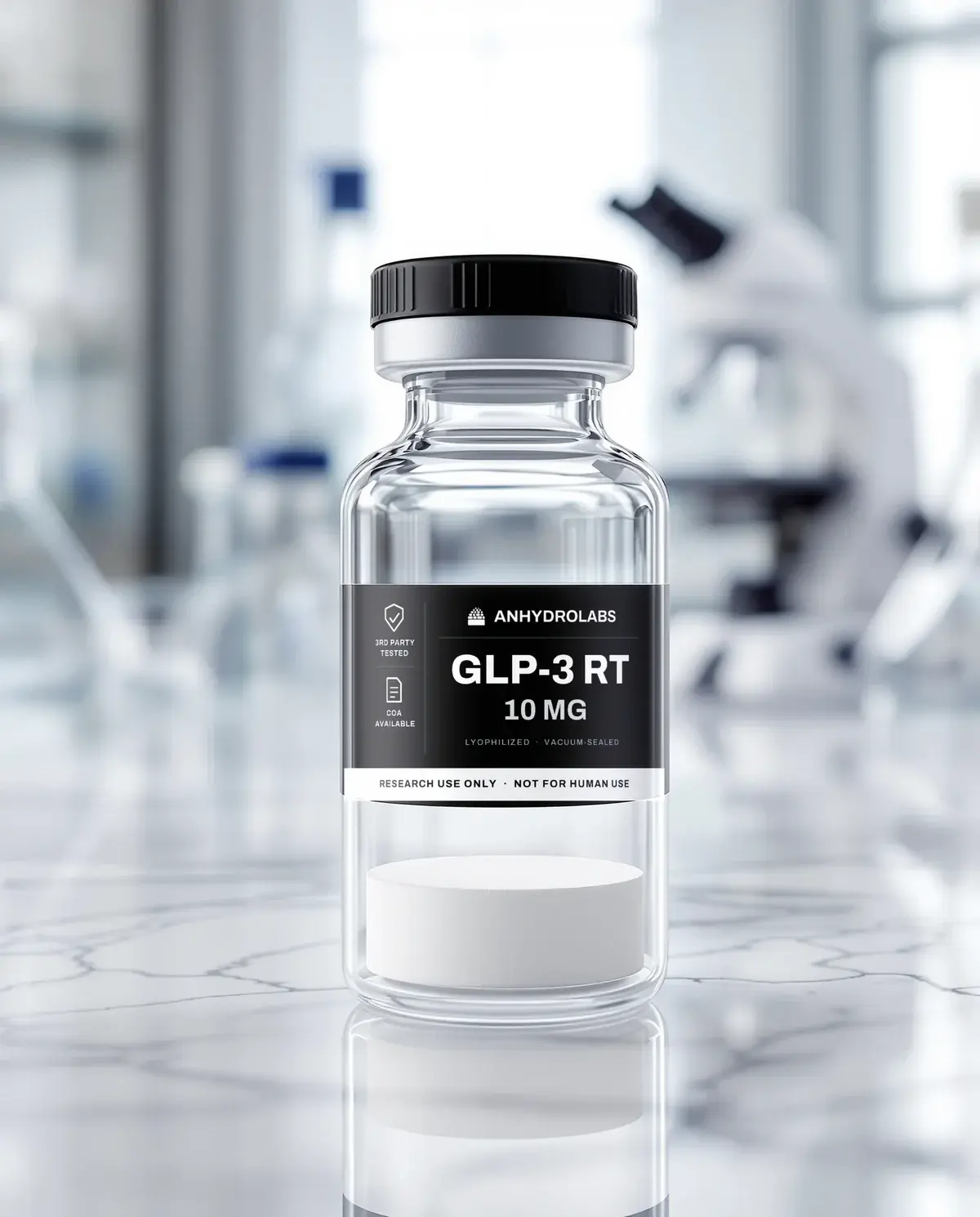
Also known as Reta and LY3437943. Lyophilized, vacuum-sealed, single vial.
- CAS
- 2381089-83-2
- Form
- Lyophilized powder
- Storage
- Frozen, in the dark
- Ships
- Vials within 1 business day, kits by Dec 12, 2026
- In stock
- Ships within the US
- Pay by card or crypto
- All sales final
Retatrutide is a synthetic 39-residue lipidated peptide from Eli Lilly and Company, also known as Reta and by the code LY3437943. A single molecule activates three related G protein-coupled receptors: the GIP receptor, the GLP-1 receptor and the glucagon receptor. It carries a C20 fatty diacid side chain and three non-coded amino acids, and it is investigational, with Phase 3 studies registered on ClinicalTrials.gov.
Supplied for laboratory research use only. Not for human or veterinary use, and not for diagnostic or therapeutic application.
Retatrutide: compound data
- Molecular formula
- C221H342N46O68
- Molecular weight
- 4,731.42 g/mol
- CAS number
- 2381089-83-2
- Source
- Published formula
- Form supplied
- Lyophilized powder, vacuum-sealed
- Concentration
- mg/mL and molarity calculator
Reference values from PubChem, the chemistry database of the US National Library of Medicine, for the compound as registered there.
About Retatrutide
Structure of Retatrutide
The structure recorded in PubChem is a linear chain of 39 amino acids that begins with tyrosine and ends in a serine amide. Three residues are not coded by the genetic machinery: α-aminoisobutyric acid (Aib) at positions 2 and 20, and α-methyl-L-leucine at position 13. The side-chain amine of lysine 17 is acylated with a 20-carbon fatty diacid through a γ-glutamic acid and a short ethylene glycol spacer. Published structural work describes the sequence as developed from the GIP backbone. Tirzepatide and semaglutide use the same lipidation idea but attach their fatty diacids at a different lysine.
Where Retatrutide comes from
Retatrutide was discovered at Eli Lilly and Company. The discovery paper, by Coskun and colleagues in Cell Metabolism in 2022, introduced it under the code LY3437943 as a single peptide with agonist activity at the glucagon receptor, the GIP receptor and the GLP-1 receptor, and followed it from in-vitro characterization through mouse studies to a first Phase 1 study in people. Retatrutide is the nonproprietary name that came later. PubChem holds the structure under the depositor title Triple G, a nickname that refers to the three targets. All authors of the discovery paper were Lilly employees.
What Retatrutide binds
All three targets are receptors that couple to the stimulatory G protein Gs and raise cyclic AMP. The discovery paper reports balanced activity at the glucagon and GLP-1 receptors and more activity at the GIP receptor. A 2024 cryo-electron microscopy study in Cell Discovery, citing that work, puts the potency at 8.9 times that of native GIP at the GIP receptor, and 0.4 and 0.3 times that of the native hormones at the GLP-1 and glucagon receptors. It solved retatrutide bound to each receptor with Gs at 2.68, 3.26 and 2.84 angstroms, with the peptide as one continuous helix.
Retatrutide in the research literature
Published systems include cell lines expressing each recombinant human receptor, used for cyclic AMP assays and for the mutational analysis in the cryo-EM study, and mouse models in the discovery paper. In people, a Phase 1b study (NCT04143802) measured safety and pharmacokinetics and reported a half-life of about six days, which the lipid side chain makes possible. A Phase 2 study (NCT04881760) followed. ClinicalTrials.gov lists a Phase 3 study, NCT05929066, sponsored by Eli Lilly, as completed. This profile names what those studies examined and leaves their outcome figures out.
Regulatory status of Retatrutide
Retatrutide is investigational. As of October 2026 it has not been approved by the FDA or by any other regulator, and a search of Drugs@FDA returns no application under its name. Its human studies have been run by Eli Lilly and Company under the code LY3437943, and ClinicalTrials.gov lists 14 Phase 3 studies with retatrutide as an intervention, alongside Phase 1 and Phase 2 work. Until a regulator acts on an application, it remains an experimental compound. Anhydrolabs supplies it as a reference reagent for in-vitro laboratory research only, not for human or veterinary diagnosis, treatment, or consumption.
Handling Retatrutide in the laboratory
The material is a lyophilized powder in a vacuum-sealed vial. Keep it frozen at -4 °F and protected from light. Let the vial reach room temperature before breaking the seal, so that moisture from the air does not condense on the cold powder. Once dissolved for in-vitro work, a solution keeps for about four weeks at 39 °F. Divide a stock solution into single-use aliquots instead of freezing and thawing it repeatedly. No compound-specific solubility figure for retatrutide was found in a primary source. Its fatty diacid side chain was designed to bind albumin, so the presence or absence of albumin in an assay buffer should be recorded alongside any potency value.
Sources
- PubChem compound summary: Triple G (retatrutide, LY3437943), CID 171390338
- Cell Metabolism, 2022. PubMed 35985340
- Structural insights into the triple agonism at GLP-1R, GIPR and GCGR manifested by retatrutide (Cell Discovery, 2024)
- Lancet, 2022. PubMed 36354040
- New England Journal of Medicine, 2023. PubMed 37366315
- ClinicalTrials.gov NCT05929066
Research notes on Retatrutide
- GLP-1 Receptor Agonists: A Research PrimerWhat a GLP-1 receptor agonist is: the receptor, native GLP-1, how exenatide, liraglutide, semaglutide and multi-agonists differ, and lab handling.
- Tirzepatide vs Retatrutide: Receptor Targets ComparedTirzepatide vs retatrutide: how retatrutide and tirzepatide compare in receptor targets, sequence, half-life and FDA status, with semaglutide for reference.
- What Is Retatrutide? The Triple Agonist ExplainedRetatrutide is a 39-residue lipidated peptide that activates the GLP-1, GIP and glucagon receptors. Learn its structure, receptor data and lab handling.
Retatrutide: common questions
Is Reta the same as Retatrutide?
Yes. Reta is another name for Retatrutide, which is also written LY3437943 (CAS 2381089-83-2). It is the same compound, supplied here as a lyophilized powder for in-vitro laboratory research use only.
What is Retatrutide supplied as?
Retatrutide is supplied as a lyophilized (freeze-dried) powder in a vacuum-sealed vial, in 5 mg, 10 mg, 15 mg, 20 mg, 30 mg, 40 mg and 60 mg, for in-vitro laboratory research use only.
How much does Retatrutide cost?
Retatrutide is from $38.95 for 5 mg, in US dollars. Volume pricing is quoted on request.
Is Retatrutide available as a 10-vial kit?
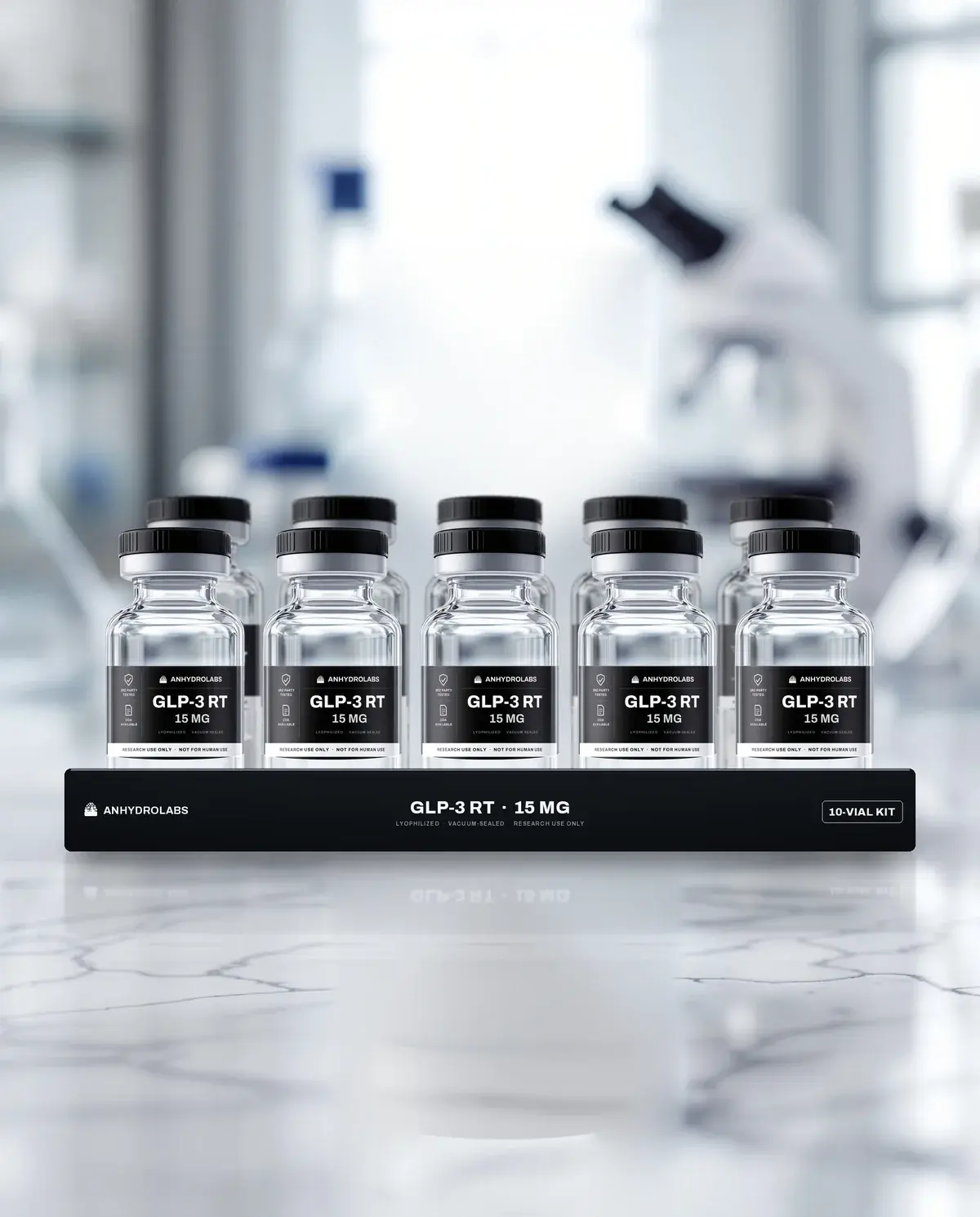
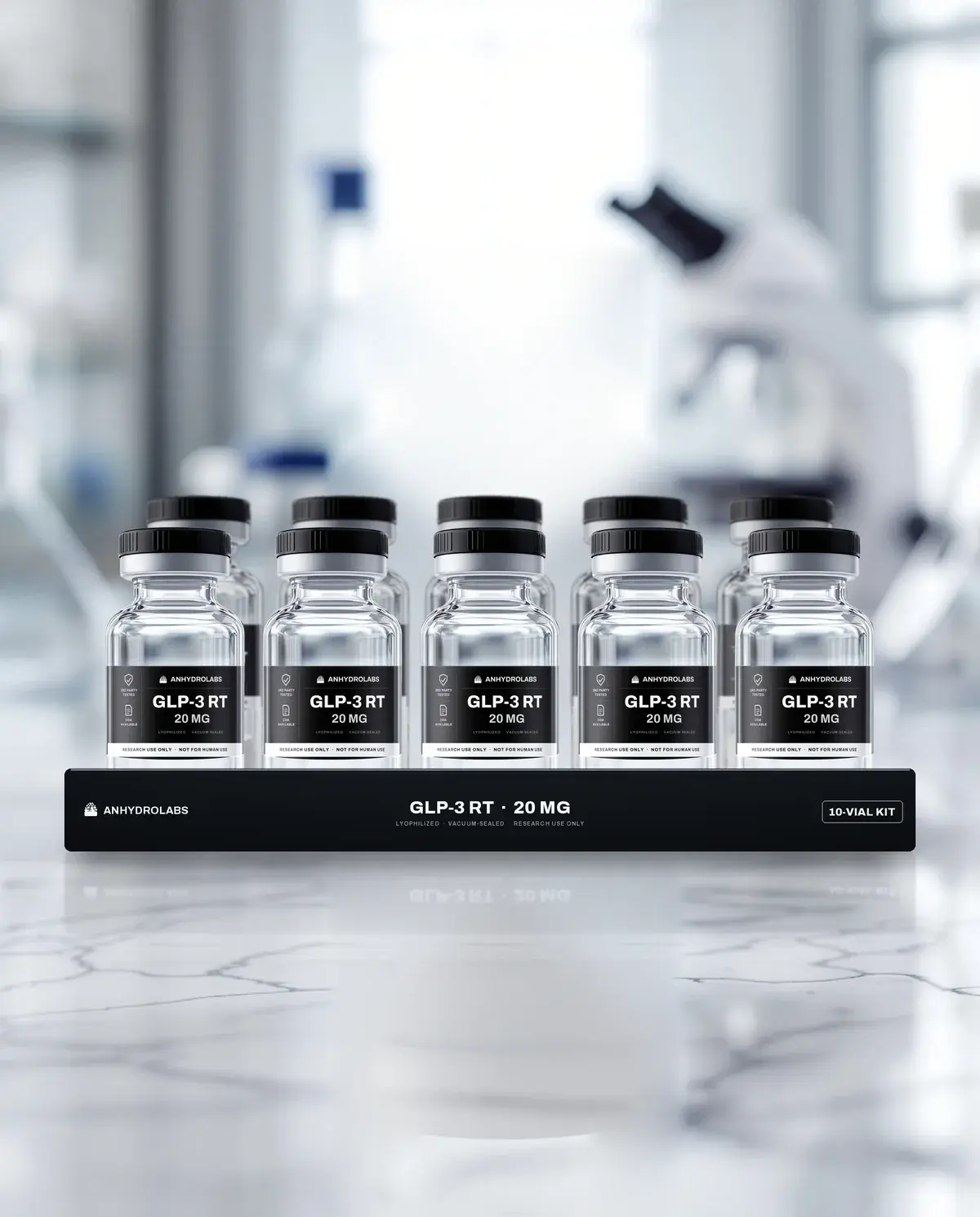
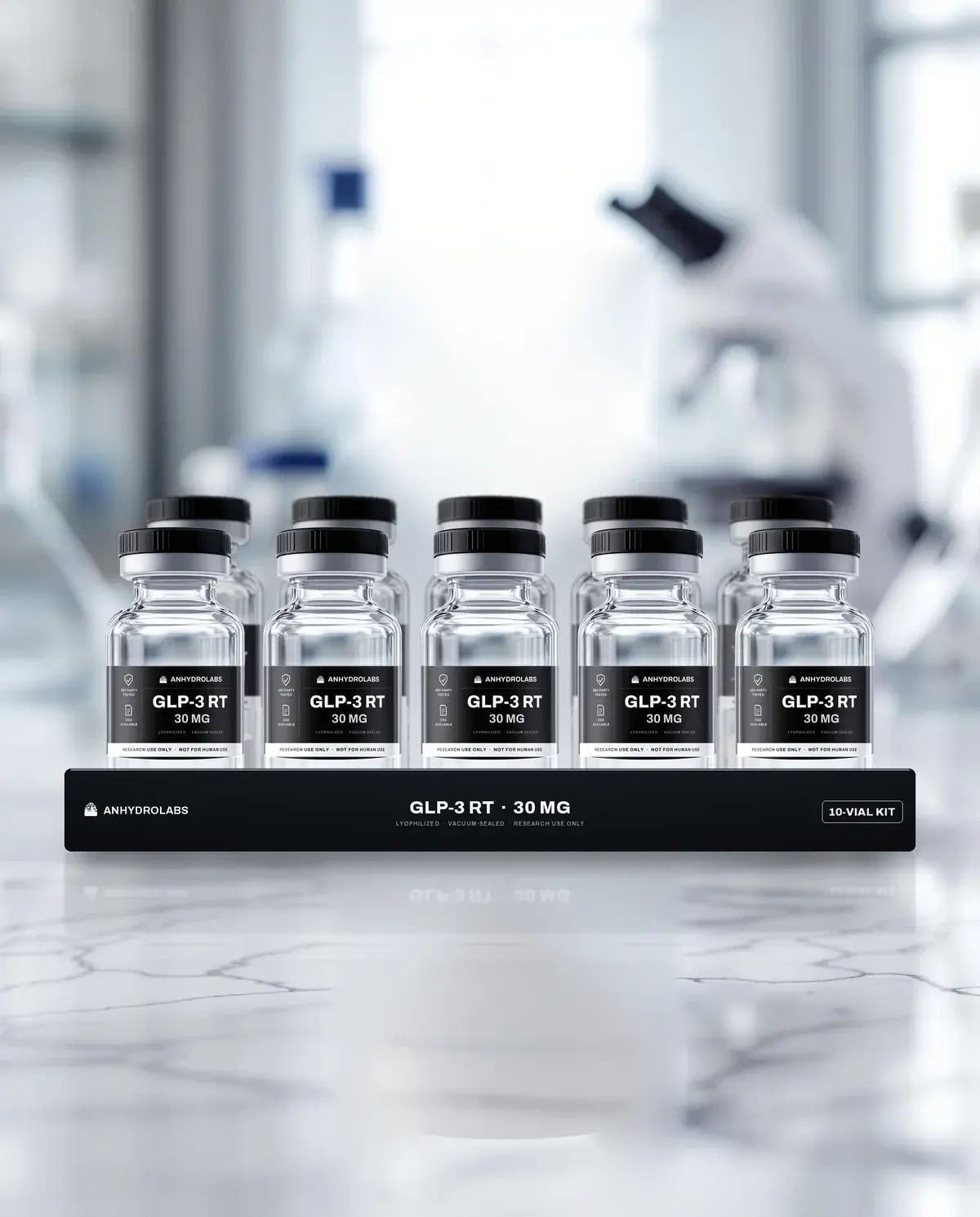
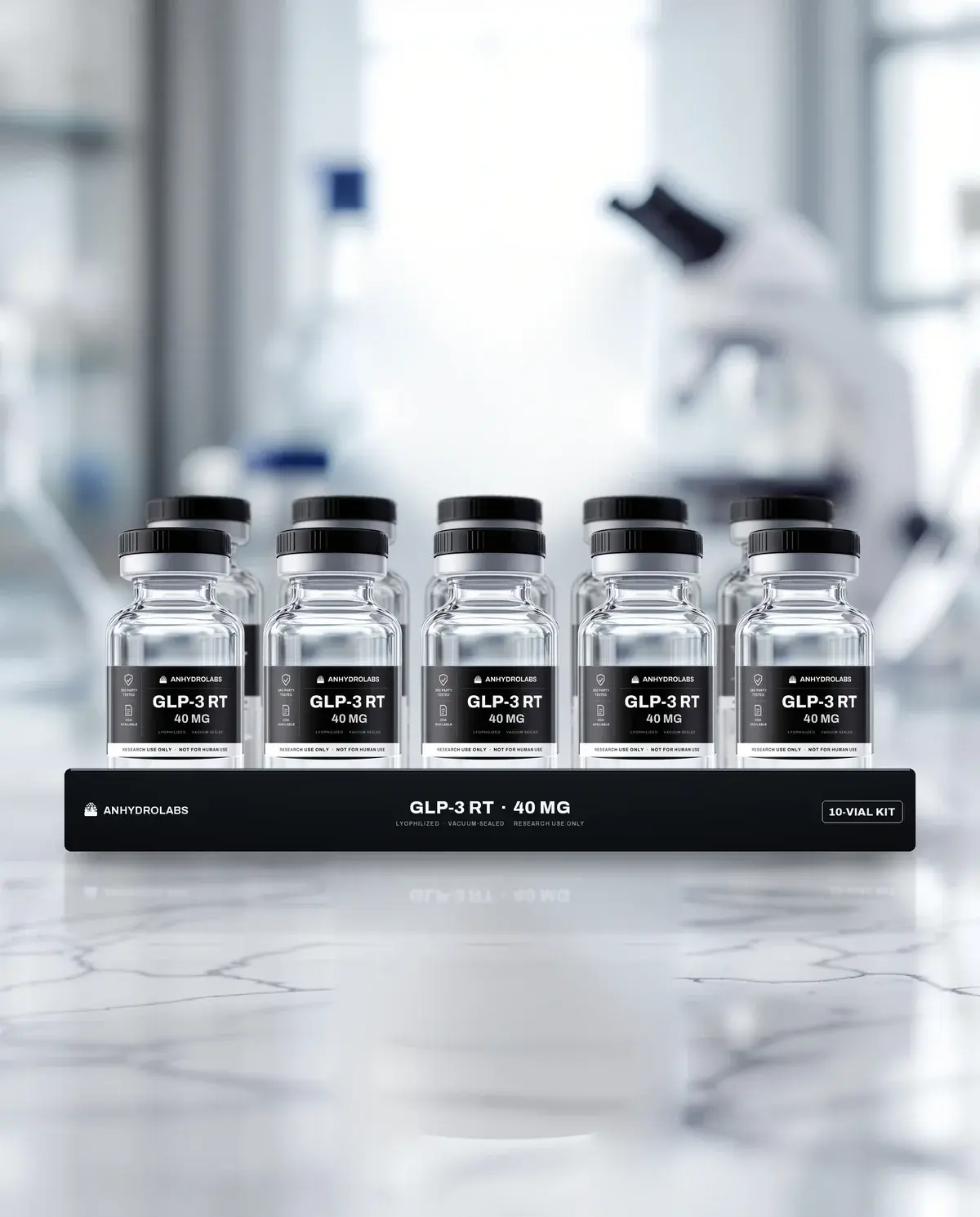
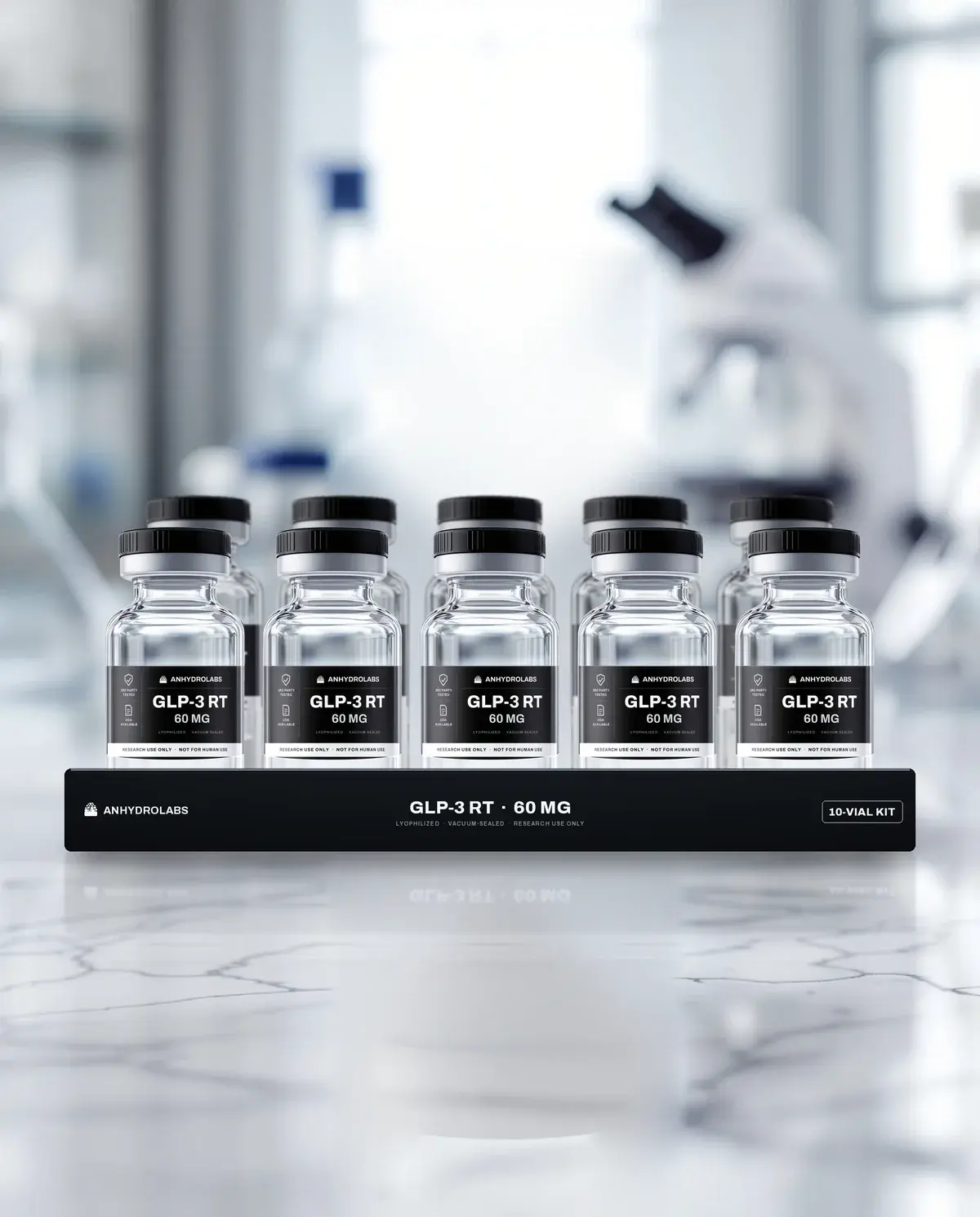
Yes. Retatrutide comes in a 10-vial kit: 5 mg for $148.50 ($14.85 per vial); 10 mg for $211.50 ($21.15 per vial); 15 mg for $256.50 ($25.65 per vial); 20 mg for $297.00 ($29.70 per vial); 30 mg for $364.50 ($36.45 per vial); 40 mg for $396.00 ($39.60 per vial); 60 mg for $630.00 ($63.00 per vial), presale prices. A kit is ten sealed vials of the same size, priced below ten single vials.
When do Retatrutide presale kits ship?
By Dec 12, 2026. Presale kits are 10% off. If we cannot ship by Dec 12, 2026, we tell you before that date and you can cancel for a full refund.
What is the CAS number of Retatrutide?
The CAS registry number of Retatrutide is 2381089-83-2.
How should Retatrutide be stored?
Frozen at −4 °F and protected from light, from the day it arrives. Let the vial reach room temperature before breaking the seal; once reconstituted, stability holds for about four weeks refrigerated at 39 °F.
How fast does Retatrutide ship?
Presale kits ship from the United States by Dec 12, 2026, to US addresses. Sizes marked in stock ship within 1 business day of payment.
Is Retatrutide for human use?
No. It is supplied as a reference reagent for laboratory research use. Not for human or veterinary use, and not for diagnostic or therapeutic application.
What receptors does retatrutide bind?
Retatrutide is an agonist at three receptors: the GIP receptor, the GLP-1 receptor and the glucagon receptor. All three couple to Gs and raise cyclic AMP. Relative to each receptor's native hormone, published figures put it at 8.9 times the potency at the GIP receptor, 0.4 times at the GLP-1 receptor and 0.3 times at the glucagon receptor.
Is retatrutide approved by the FDA?
No. As of October 2026 retatrutide is an investigational compound. Drugs@FDA lists no application for it, and ClinicalTrials.gov lists Phase 3 studies sponsored by Eli Lilly and Company, including NCT05929066, which is marked completed.
How is retatrutide different from tirzepatide?
The main difference is the number of receptors each activates. Tirzepatide activates the GIP and GLP-1 receptors, while retatrutide also activates the glucagon receptor. Both are lipidated peptides, but the 2024 structural paper notes that retatrutide carries its fatty diacid on lysine 17 and tirzepatide on lysine 20.
$38.95
Retatrutide · 5 mg