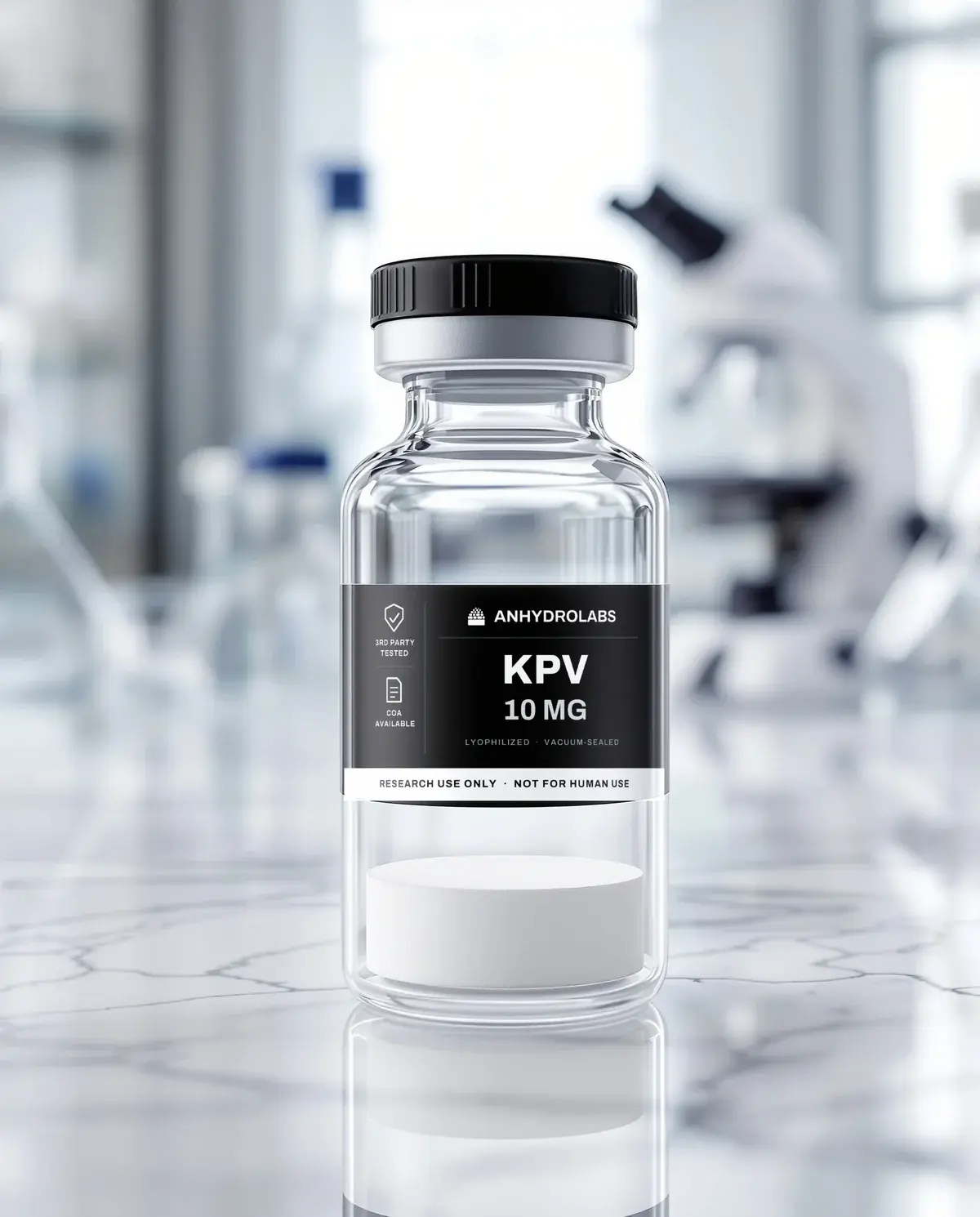
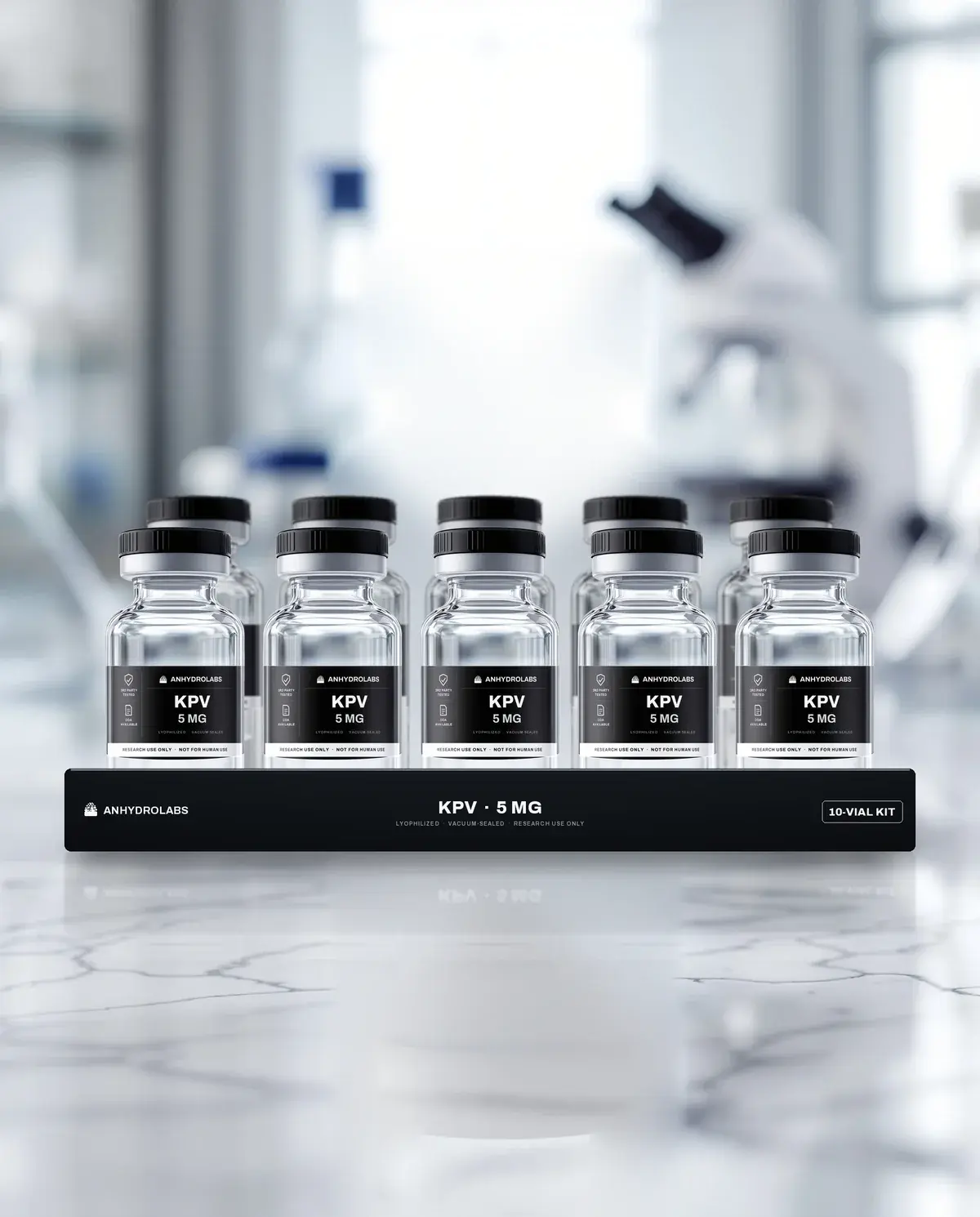
KPV
Also known as Lys-Pro-Val. Lyophilized, vacuum-sealed, single vial.
- CAS
- 67727-97-3
- Form
- Lyophilized powder
- Storage
- Frozen, in the dark
- Ships
- Vials within 1 business day, kits by Dec 12, 2026
- In stock
- Ships within the US
- Pay by card or crypto
- All sales final
KPV is the tripeptide Lys-Pro-Val, the three C-terminal residues of alpha-melanocyte-stimulating hormone, and PubChem lists it as alpha-MSH (11-13). It is known in the literature as the short fragment of that hormone studied for its action on inflammatory signaling in cultured cells, and as a substrate of the peptide transporter PepT1.
Supplied for laboratory research use only. Not for human or veterinary use, and not for diagnostic or therapeutic application.
KPV: compound data
- Molecular formula
- C16H30N4O4
- Molecular weight
- 342.43 g/mol
- CAS number
- 67727-97-3
- PubChem
- CID 125672
- Form supplied
- Lyophilized powder, vacuum-sealed
- Concentration
- mg/mL and molarity calculator
Reference values from PubChem, the chemistry database of the US National Library of Medicine, for the compound as registered there.
About KPV
Structure of KPV
KPV is L-lysyl-L-prolyl-L-valine, with a free amino terminus and, in the PubChem record, a free carboxylic acid at the valine. In the UniProt entry for pro-opiomelanocortin, alpha-melanocyte-stimulating hormone is the 13-residue peptide SYSMEHFRWGKPV, and its last residue is annotated as a valine amide, so the hormone's own terminus differs from the free-acid tripeptide. Because corticotropin begins with the same 13 residues, PubChem also lists the synonym ACTH-(11-13). The record includes an acetate salt among its synonyms. The tripeptide is small enough to be a substrate for PepT1, a transporter of di- and tripeptides.
Where KPV comes from
The parent molecule, alpha-melanocyte-stimulating hormone, is cut from pro-opiomelanocortin, a 267-residue pituitary precursor. In 1989 Hiltz and Lipton at the University of Texas Southwestern Medical Center in Dallas reported in the FASEB Journal that the C-terminal tripeptide, then believed to carry the hormone's antipyretic message sequence, also acted in a mouse model of ear swelling induced by picryl chloride. Later papers from the same group refer to it as alpha-MSH(11-13) and examined a D-valine variant. The names KPV, Lys-Pro-Val and alpha-MSH (11-13) all refer to the same tripeptide.
What KPV binds
The full hormone is a ligand of the melanocortin receptors MC1R, MC3R, MC4R and MC5R, according to UniProt. For the tripeptide, the mechanism described in the literature is different. Dalmasso and colleagues reported in 2008 that KPV is carried into intestinal epithelial cells and T cells by PepT1, a transporter of di- and tripeptides, and that nanomolar concentrations inhibited activation of the NF-kappaB and MAP kinase signaling pathways in cells stimulated with pro-inflammatory cytokines. The authors noted that the mechanism had until then remained unknown. No dedicated receptor for KPV is described in the sources consulted.
KPV in the research literature
The 2008 study used the human intestinal epithelial lines Caco2-BBE and HT29-Cl.19A and human Jurkat T cells, with an NF-kappaB luciferase reporter, Western blotting, real-time RT-PCR and ELISA as readouts, and tritium-labeled KPV to measure uptake kinetics. The same paper examined KPV in two mouse models of colitis, induced by dextran sulfate sodium and by TNBS. Earlier work used mouse ear models. The literature is small and preclinical: FDA states that it has not identified any human exposure data on products containing KPV.
Regulatory status of KPV
KPV is not an approved drug. FDA's page on bulk substances that may present significant safety risks, current as of April 22, 2026, lists KPV among nominations withdrawn by the nominators and states that the agency lacks important information about any safety issues it raises. For its compounding advisory committee meeting of July 23, 2026, FDA proposed that neither KPV free base nor KPV acetate be included on the 503A bulks list, and said a final determination would follow the advisory process. KPV is supplied here as a reference reagent for in-vitro laboratory research only, not for diagnostic or therapeutic application.
Handling KPV in the laboratory
The material is a lyophilized powder in a vacuum-sealed vial. Keep the sealed vial frozen at -4 °F and protected from light, and let it reach room temperature before breaking the seal so that moisture does not condense on the powder. Once in solution, keep it at 39 °F and plan to use it within about four weeks. Divide a solution into single-use aliquots instead of freezing and thawing one container repeatedly. No solubility or stability figure specific to KPV appears in the sources consulted for this profile, so none is given here. PubChem lists both the free tripeptide and an acetate salt, and the salt form changes the mass of material that corresponds to a given molar amount.
Sources
- PubChem compound summary: Lys-Pro-Val, alpha-MSH (11-13), CID 125672
- Dalmasso et al., Gastroenterology, 2008. PubMed Central PMC2431115
- Antiinflammatory activity of a COOH-terminal fragment of the neuropeptide alpha-MSH (Hiltz and Lipton, FASEB J, 1989)
- UniProt P01189: Pro-opiomelanocortin, human
- Certain Bulk Drug Substances for Use in Compounding that May Present Significant Safety Risks (FDA, content current as of April 22, 2026)
- FDA briefing document, compounding advisory committee meeting, July 23-24, 2026
Research notes on KPV
- Are Peptides Legal? US Law for Research BuyersAre peptides legal in the US? What research use only means, why these are not FDA-approved drugs, which are controlled substances, and how imports work.
KPV: common questions
Is Lys-Pro-Val the same as KPV?
Yes. Lys-Pro-Val is another name for KPV (CAS 67727-97-3). It is the same compound, supplied here as a lyophilized powder for in-vitro laboratory research use only.
What is KPV supplied as?
KPV is supplied as a lyophilized (freeze-dried) powder in a vacuum-sealed vial, in 5 mg and 10 mg, for in-vitro laboratory research use only.
How much does KPV cost?
KPV is $39.95 for any size, in US dollars. Volume pricing is quoted on request.
Is KPV available as a 10-vial kit?
Yes. KPV comes in a 10-vial kit: 5 mg for $135.00 ($13.50 per vial); 10 mg for $180.00 ($18.00 per vial), presale prices. A kit is ten sealed vials of the same size, priced below ten single vials.
When do KPV presale kits ship?
By Dec 12, 2026. Presale kits are 10% off. If we cannot ship by Dec 12, 2026, we tell you before that date and you can cancel for a full refund.
What is the CAS number of KPV?
The CAS registry number of KPV is 67727-97-3.
How should KPV be stored?
Frozen at −4 °F and protected from light, from the day it arrives. Let the vial reach room temperature before breaking the seal; once reconstituted, stability holds for about four weeks refrigerated at 39 °F.
How fast does KPV ship?
Presale kits ship from the United States by Dec 12, 2026, to US addresses. Sizes marked in stock ship within 1 business day of payment.
Is KPV for human use?
No. It is supplied as a reference reagent for laboratory research use. Not for human or veterinary use, and not for diagnostic or therapeutic application.
What is the sequence of KPV?
KPV is lysine, proline and valine in that order: L-lysyl-L-prolyl-L-valine. It corresponds to residues 11 to 13 of alpha-melanocyte-stimulating hormone, whose full sequence in UniProt is SYSMEHFRWGKPV. The hormone ends in a valine amide, while the PubChem record for KPV is the free acid.
How does KPV enter cells?
A 2008 study in Gastroenterology reported that KPV is transported into intestinal epithelial cells and T cells by PepT1, a transporter of di- and tripeptides. The authors measured uptake with tritium-labeled KPV and by competition with a labeled PepT1 substrate.
Is KPV approved by the FDA?
No. FDA lists KPV among bulk substance nominations that were withdrawn and says it has not identified any human exposure data for it. In July 2026 the agency proposed to its compounding advisory committee that KPV free base and KPV acetate not be included on the 503A bulks list.
$39.95
KPV · 10 mg