Compound profiles
Research overviews of individual peptides: sequence, structure, what they are studied for, and how they are supplied.
 Compound profiles
Epithalon (Epitalon): The Tetrapeptide Explained
Epitalon (Epithalon) explained: the Ala-Glu-Asp-Gly sequence, its origin in pineal extract research, the telomerase studies, regulatory status and lab handling.
· 8 min read
 Compound profiles
Thymosin Alpha-1: Structure and Research
Thymosin alpha 1 peptide profile: the 28-residue N-acetylated sequence, its origin in prothymosin alpha, thymalfasin's regulatory status and lab handling.
· 8 min read
 Compound profiles
ARA-290 (Cibinetide): An EPO-Derived Peptide
ARA-290 (cibinetide) explained: the 11-residue helix B surface peptide from erythropoietin, the EPOR/CD131 heteroreceptor, research models and status.
· 9 min read
 Compound profiles
LL-37: The Human Cathelicidin Peptide
LL-37 peptide explained: the 37-residue human cathelicidin cut from hCAP-18. Sequence, formula, CAS, helical structure, receptors studied and lab handling.
· 9 min read
 Compound profiles
Snap-8: The Acetyl Octapeptide-3 Explained
The Snap-8 peptide, acetyl octapeptide-3: its eight-residue sequence, the SNAP-25 segment it copies, how it relates to Argireline, and lab handling.
· 8 min read
 Compound profiles
VIP: Vasoactive Intestinal Peptide in Research
What the VIP peptide is: the 28-residue sequence, its VPAC1 and VPAC2 receptors, the 1970 isolation, aviptadil's status and lab handling notes.
· 8 min read
 Compound profiles
Eloralintide: An Amylin Receptor Agonist
Eloralintide (LY3841136) is a selective amylin receptor agonist from Eli Lilly. Its structure, AMY1R selectivity, half-life, trial status and handling.
· 10 min read
 Compound profiles
Glutathione: The Tripeptide Antioxidant
The glutathione peptide explained: its γ-linked tripeptide structure, identity data, GSH and GSSG redox chemistry, synthesis enzymes and lab handling.
· 10 min read
 Compound profiles
Kisspeptin: KISS1R Signaling in Research
What the kisspeptin peptide is: how kisspeptin-10 and kisspeptin-54 signal through KISS1R to control reproductive hormone release, and lab handling.
· 11 min read
 Compound profiles
Cerebrolysin: A Peptide Mixture Explained
What Cerebrolysin is: a porcine brain peptide mixture, how it is analyzed, how the acute ischemic stroke meta-analysis literature is built, and its status.
· 10 min read
 Compound profiles
DSIP: Delta Sleep-Inducing Peptide in Research
What the DSIP peptide (delta sleep-inducing peptide) is: the WAGGDASGE nonapeptide's identity, its 1977 isolation, the missing receptor and lab handling.
· 10 min read
 Compound profiles
Melanotan II: Melanocortin Receptor Research
What Melanotan 2 is at the molecular level: the cyclic lactam structure, its melanocortin receptor profile, US regulatory record and lab handling.
· 11 min read
 Compound profiles
IGF-1 LR3: How It Differs From IGF-1
IGF-1 LR3 is an 83-amino-acid recombinant analog of human IGF-1 with an Arg3 swap and an N-terminal extension. Sequence, IGFBP binding, assays and handling.
· 14 min read
 Compound profiles
5-Amino-1MQ: The NNMT Inhibitor Explained
5-Amino-1MQ explained: a small molecule, not a peptide, its formula and salt form, the NNMT enzyme it inhibits, the models studied and lab handling.
· 9 min read
 Compound profiles
AOD9604: The hGH Fragment 176-191 Analog
The AOD 9604 peptide explained: a synthetic 16-residue fragment of human growth hormone (hGH), its disulfide ring, the fat metabolism studies and status.
· 11 min read
 Compound profiles
SS-31 (Elamipretide): A Mitochondria-Targeted Peptide
The SS-31 peptide (elamipretide): its D-Arg-Dmt-Lys-Phe-NH2 sequence, how it binds cardiolipin, its Szeto-Schiller origin and its 2025 FDA status.
· 9 min read
 Compound profiles
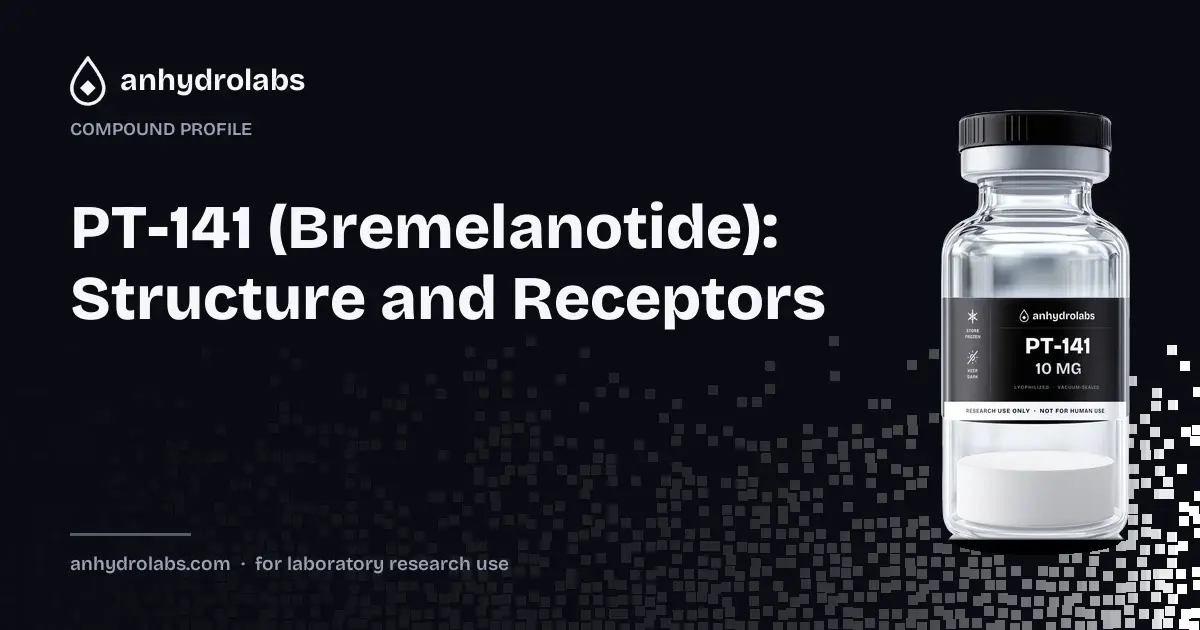
PT-141 (Bremelanotide): Structure and Receptors
What the PT-141 peptide is at the molecular level: bremelanotide's cyclic heptapeptide structure, its melanocortin receptor profile and lab handling.
· 10 min read
 Compound profiles
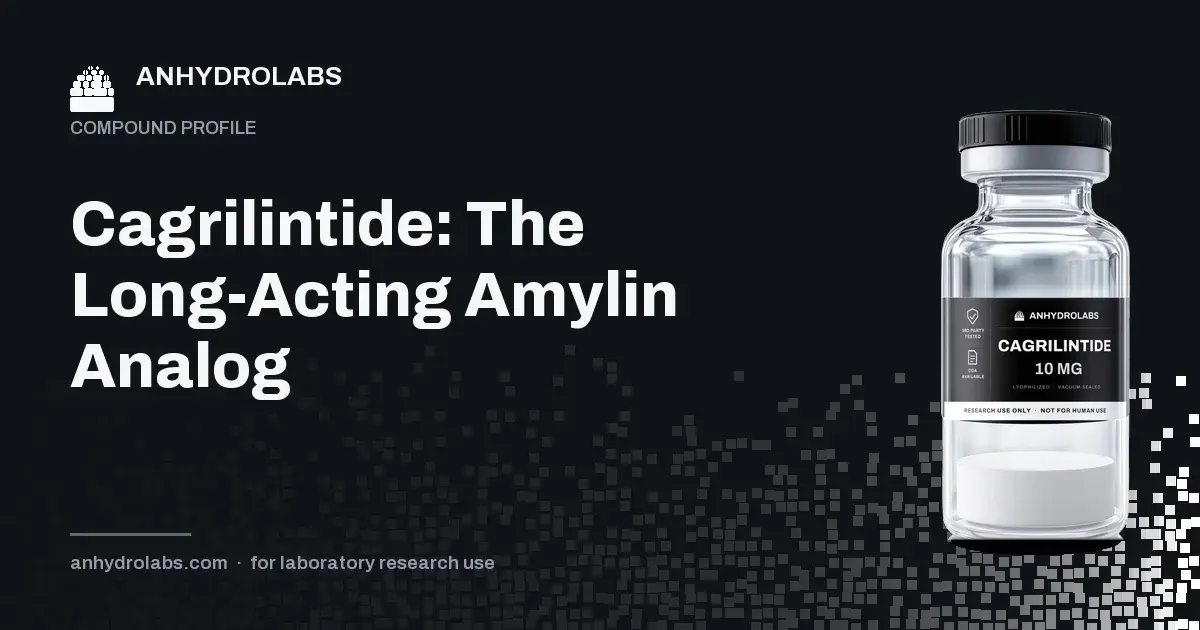
Cagrilintide: The Long-Acting Amylin Analog
Cagrilintide is a lipidated 37-residue amylin analog from Novo Nordisk. Learn its sequence, receptor targets, half-life, trial status and lab handling.
· 10 min read
 Compound profiles
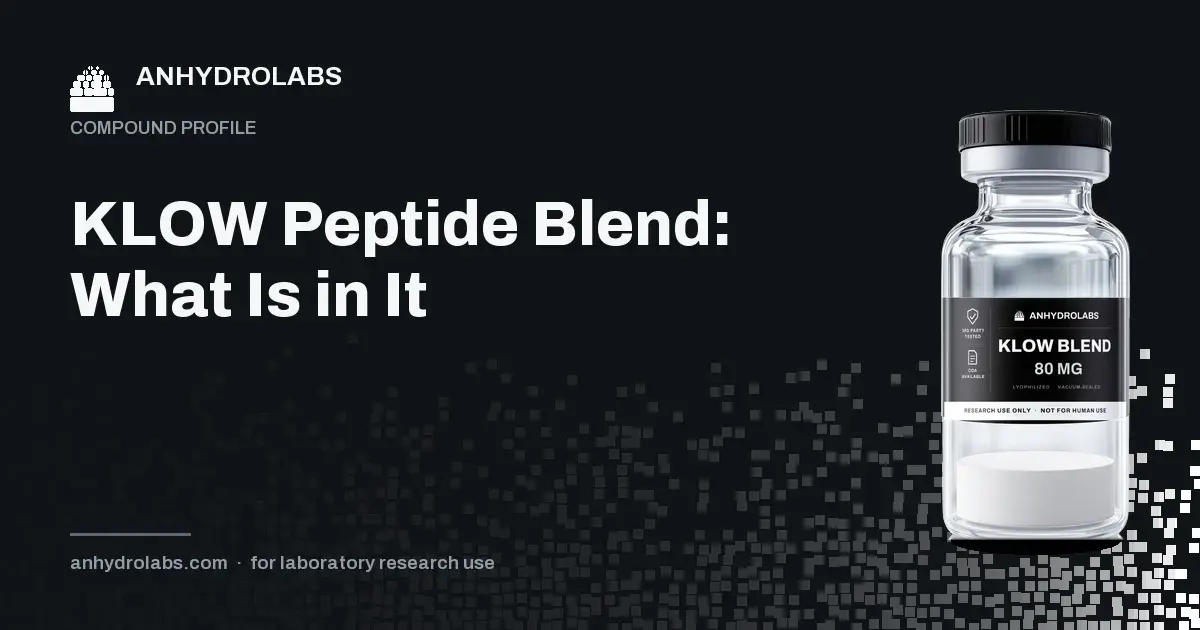
KLOW Peptide Blend: What Is in It
The KLOW peptide blend is four peptides in one 80mg vial: GHK-Cu, KPV, BPC-157 and TB-500. What each is, the molar ratios, COA checks and KLOW vs GLOW.
· 11 min read
 Compound profiles
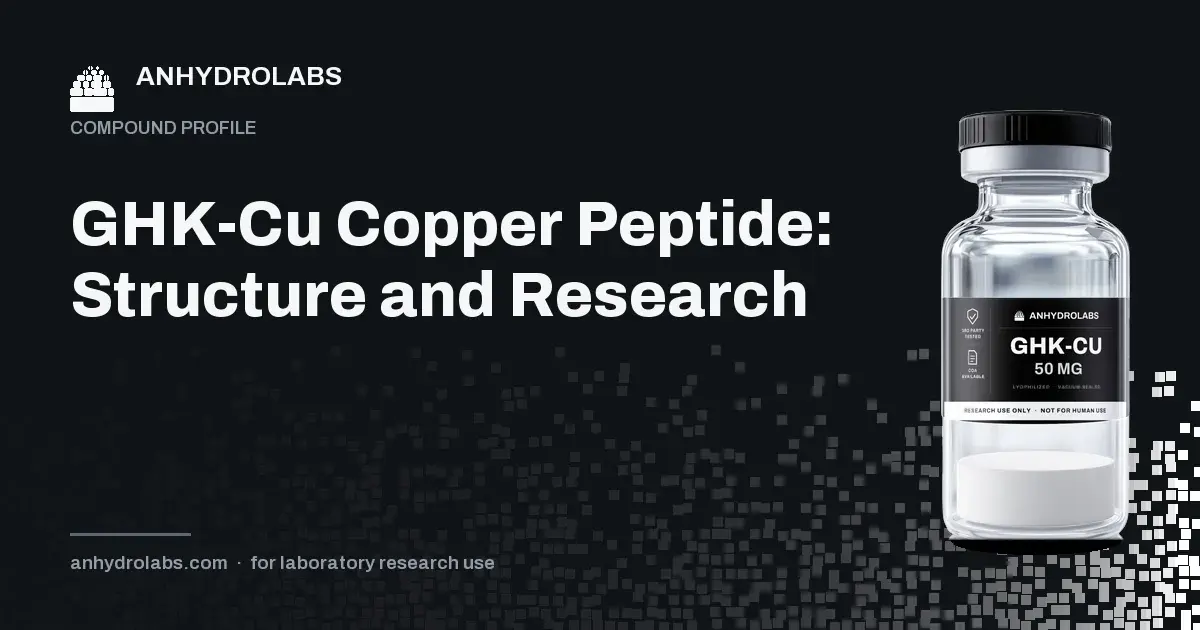
GHK-Cu Copper Peptide: Structure and Research
Copper peptides explained through GHK-Cu: the Gly-His-Lys sequence, how it binds copper(II), its discovery in human plasma, identifiers and lab handling.
· 13 min read
 Compound profiles
MOTS-c Peptide: The Mitochondrial-Derived Peptide
The MOTS-c peptide explained: its 16-residue sequence, formula and CAS number, its origin in the mitochondrial 12S rRNA gene, the AMPK link and its status.
· 12 min read
 Compound profiles
What Is Retatrutide? The Triple Agonist Explained
Retatrutide is a 39-residue lipidated peptide that activates the GLP-1, GIP and glucagon receptors. Learn its structure, receptor data and lab handling.
· 12 min read
 Compound profiles
What Is BPC-157? Sequence, Structure and Research
What is BPC-157? A 15-residue synthetic peptide from gastric juice studies: its sequence, formula, CAS number, proposed mechanisms and regulatory status.
· 12 min read
 Compound profiles
What Is TB-500? Thymosin Beta-4 Fragment Explained
What is TB-500? The acetylated seven-residue fragment Ac-LKKTETQ from thymosin beta-4's actin-binding region: identity, origin, research and status.
· 11 min read